
What to check before overloading an outlet with holiday lights
Before you plug holiday lights in around the TV stand, check the cords, strips and light sets, and learn which warning signs mean it is time for an electrician.
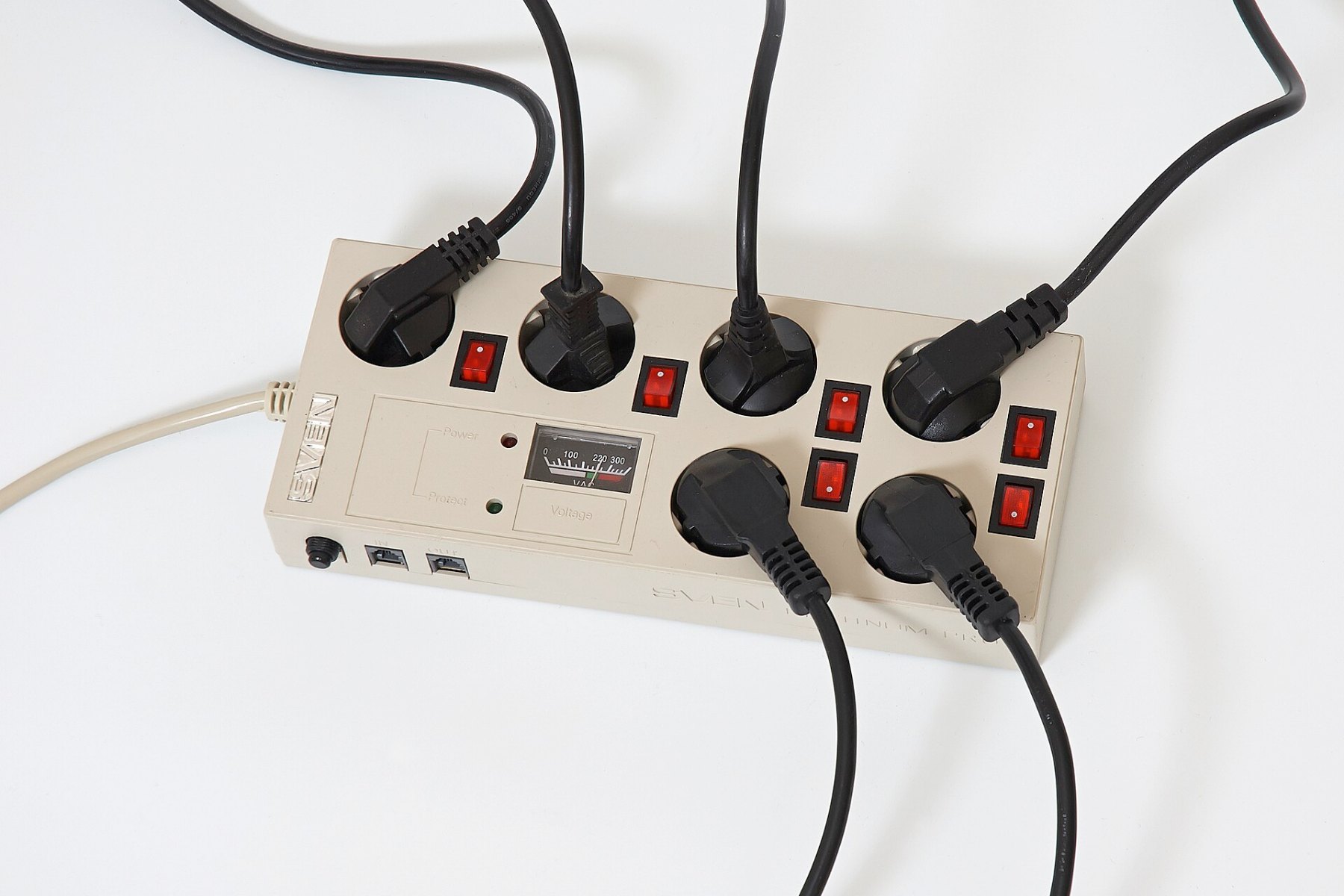
The outlet behind the TV stand is probably already busy. A TV, a console, a router and a power strip share it, and then the Christmas lights arrive: a garland on the stand, a string along the shelf, a runner of lights down the hallway. One outlet or one cord can end up carrying far more than anyone planned.
That matters the day you plug in, not in theory. The federal Consumer Product Safety Commission (CPSC) says overloaded extension cords can cause fires, and it advised stopping use of any cord that feels hot. A damaged cord or one buried under a rug adds fire and shock risk on top of that.
This guide covers what you can check with your eyes, your hands and the labels printed on your cords and light sets. It also marks where a warm outlet or a repeat breaker trip becomes a job for a licensed electrician. If your own cord or light set has printed instructions, follow those first.
What's going on
Holiday lights are a temporary load added to wiring planned for everyday use. The weak links are usually the parts in between: extension cords, power strips and the plugs on the light sets.
In a February 24, 1999 release, CPSC said a cord, power strip or surge protector must be able to handle the current the plugged-in appliance requires. When it cannot, the extra load shows up as heat. That is the warm cord you feel, and CPSC advised throwing away any cord that is hot to the touch.
A warm cord and a warm outlet are different problems. A cord problem is usually something you can see and swap: damage, a thin cord, too many light sets. An outlet or switch that is unusually warm or hot is another matter. CPSC and the National Electrical Safety Foundation said in a May 25, 2000 release that this may point to unsafe wiring. That is not a DIY fix.
The steps below make sure the things you own are not the cause, and help you spot the signs that the wiring in the wall is.
What you can safely check or fix
These steps need no tools and no license. They cover only the cords, strips and light sets you own and the plugs you can see. Do them in order.
- Unplug everything you are about to inspect, pulling the plug and never the cord (CPSC).
- Check each light set, new or old, for cracked sockets, frayed or bare wires and loose connections (CPSC).
- Throw out any light set that shows those problems (CPSC).
- Check each extension cord for age, cracks and wear (CPSC).
- Discard any cord that is old, cracked, worn or damaged (CPSC).
- Look for a UL or ETL certification label on each extension cord (CPSC).
- Look for the same label on each power strip (CPSC).
- Look for a lab label such as UL or ETL on each light set (CPSC).
- Choose newer light sets with thicker wiring and fuses when you replace one (CPSC).
- Read the gauge printed on each extension cord (CPSC).
- Stop using any cord marked #18, since CPSC's May 1, 1990 release said cords should be #16 or a lower AWG number (CPSC).
- Read the label on any cord you plan to use with holiday lights to see what use it is rated for (CPSC).
- Replace any cord whose label does not cover that use (CPSC).
- Find the watt rating printed on the cord (CPSC).
- Keep everything plugged into that cord under its rating (CPSC).
- Count the light sets on each extension cord (CPSC).
- Keep it to three standard-size sets or fewer, as a November 24, 1997 CPSC release advised (CPSC).
- If a cord is overloaded, swap in a higher-rated cord (CPSC).
- Or unplug some appliances and move them to other outlets (CPSC).
- Leave the third prong on any three-prong plug, because removing it raises shock risk (CPSC).
- Run cords in the open, never under carpets or hallway runners, which keep heat from escaping (CPSC).
- Keep rugs and objects, such as a coffee table leg, off any part of a cord that is in use (CPSC).
- Plug the lights in once every check above passes.
- Let the lights run for a while.
- Feel each cord with your hand (CPSC).
- If a cord feels hot, unplug it and throw it away (CPSC).
- Turn the lights off at bedtime and whenever you leave, since they could short out and start a fire (CPSC).
Where to stop and call a pro
Cords are a stopgap. CPSC said extension cords should not make up for inadequate home wiring and should be used only when necessary and temporarily. CPSC and NESF likewise called cords temporary, not permanent wiring.
If your plan needs more outlets near the TV stand, or a cord that stays out all winter, the answer is not a longer cord. It is a licensed electrician.
Stop here: Adding outlets or circuits, and any work inside a breaker or fuse panel or on in-wall wiring, needs a licensed electrician. Do not open the panel, add a circuit or cut into a wall yourself.
Stop using the outlet or switch and call a pro in these cases:
- An outlet or switch is unusually warm or hot. CPSC and NESF said to stop using it and have an electrician check it soon.
- A fuse blows or a breaker trips again and again. If an appliance causes it, or shocks you, CPSC and NESF advised unplugging it and having it repaired or replaced. If it trips with nothing special plugged in, the wiring is the likelier cause.
- A fuse does not match the circuit size. CPSC and NESF called a larger fuse a serious fire hazard. Reading the size is fine, but changing the fuse is the electrician's job.
What to tell the pro
A short, specific description helps the electrician judge how urgent the visit is. Write these down before you call:
- Which outlet or switch is involved and which room it is in, for example the outlet behind the TV stand.
- What you noticed: warmth, heat, a tripped breaker, a blown fuse or a shock.
- What was plugged in, including how many light sets, and whether a power strip or extension cord was in use.
- The markings on that cord: the UL or ETL label, the gauge and the watt rating.
- When it happens: right away, after the lights have been on a while, or only with certain items.
- That you stopped using the outlet and unplugged what was on it.
- What you tried, such as moving appliances to other outlets, and whether it changed anything.
Those cord markings are the same details CPSC points readers to, so reading them out saves a trip back to the living room.
Quick answers
What should I do if an extension cord feels hot?
CPSC advised stopping use of the cord and throwing it away. If it was overloaded, switch to a higher-rated cord or move appliances to other outlets.
How many light sets can go on one extension cord?
A November 24, 1997 CPSC release advised no more than three standard-size light sets per extension cord. Also keep the total under the cord's printed watt rating.
When does a warm outlet mean I need an electrician?
CPSC and NESF said an outlet or switch that is unusually warm or hot may point to unsafe wiring. Stop using it and have an electrician check it soon.
Sources
- CPSC Warns Consumers About Faulty Extension Cords, Power Strips and Surge Protectors | CPSC.gov
- Limit Extension Cords To Reduce Risk Of Fire | CPSC.gov
- CPSC Releases “Do’s and Don’ts” of Holiday Decorating | CPSC.gov
- CPSC Releases Safety Tips for the Holiday Season | CPSC.gov
- CPSC and NESF Urge Consumers to ""Plug Into Electrical Safety"" | CPSC.gov