
Hanging exterior Christmas lights from the ground, in order
A ground-level order of work for plug-in light sets and a portable GFCI, plus when a dead or tripping outdoor outlet means calling a licensed electrician.
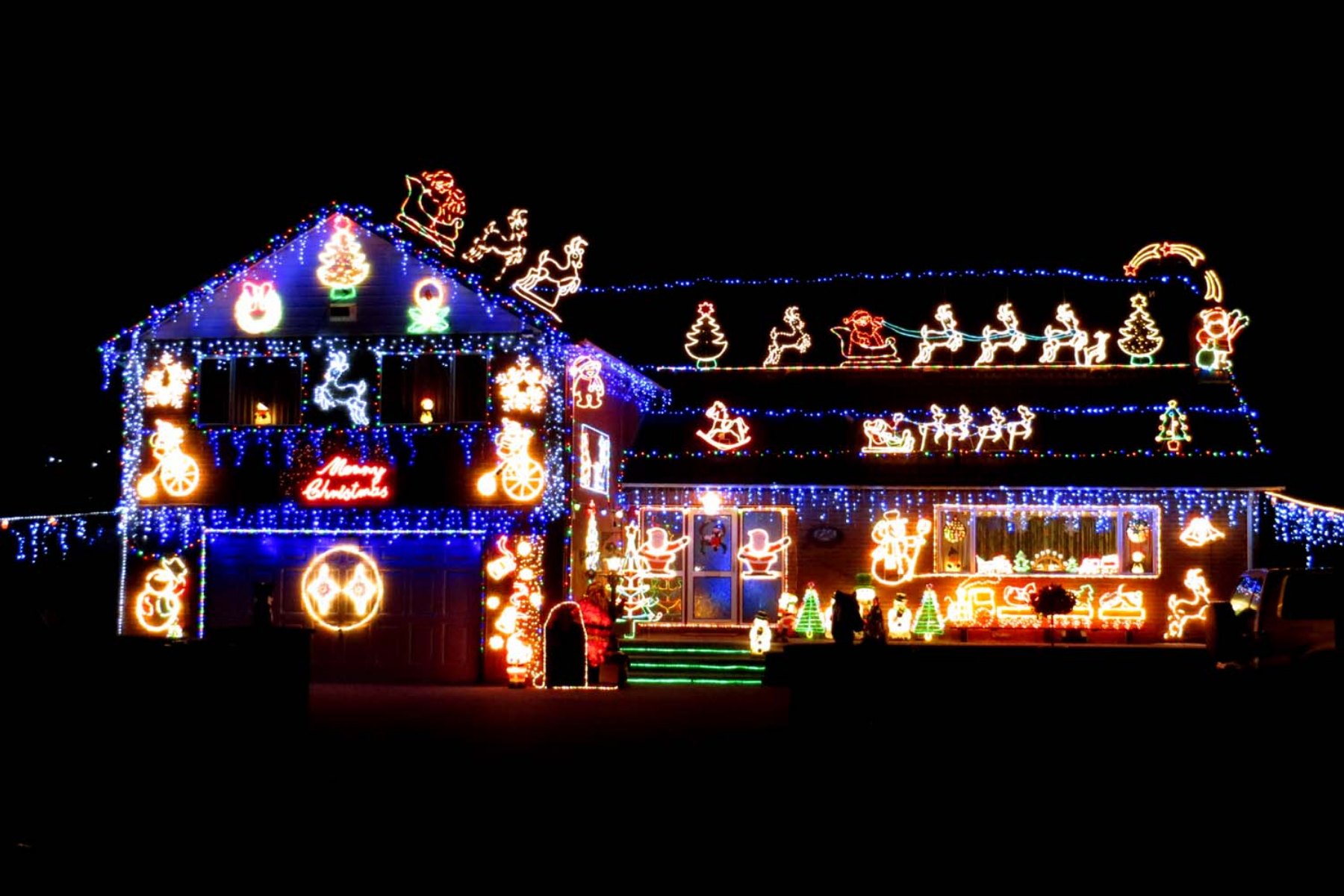
Most trouble with outdoor lights starts before a single bulb goes up: a damaged set, an unsuitable cord, or a plug that is not protected. This guide takes the order of work seriously. You unplug, inspect, choose your protection, hang from the ground, and only then plug in. It ends with how to take the lights down without creating a new hazard.
Everything here stays at ground level and covers plug-in light sets and a portable GFCI only. It does not cover roof work, panel work or new circuits. Those, along with any outdoor outlet that is dead or will not stay reset, belong to a licensed electrician. The Find a Pro search on this site links each listing to the state's own license lookup.
What's going on
Lights outdoors deal with weather and long cord runs, so the protection at the plug matters as much as the bulbs. In its December 2018 release, the Consumer Product Safety Commission (CPSC) advised plugging outdoor lights only into a GFCI-protected receptacle or a portable GFCI, and using only lights certified for outdoor use. Its 2007 release gave the same advice.
A GFCI is the protection that cuts power when current takes a path it should not. That means a GFCI that keeps tripping is not just a nuisance. The cause may be the outlet, the wiring or a damaged set, and you can only sort out the last of those yourself.
Light sets and cords wear out, too. CPSC's 2017 release says to check every set, new or old, for cracked sockets, frayed or bare wires and loose connections, and to throw out damaged sets. It also says extension cords must be rated for the intended use and be in good condition.
What you can safely check or fix
Work in this order. Each step happens on the ground, and the lights stay unplugged until the plug-in steps near the end. CPSC's 2017 release urged caution when standing on a ladder or chair to hang decorations, so if a spot is out of reach from the ground, leave it bare.
- Unplug every light set and extension cord before you handle them. CPSC, 2017
- Inspect each light set for cracked sockets, frayed or bare wires and loose connections. CPSC, 2017
- Throw out any damaged set instead of repairing it. CPSC, 2017
- Read the label on each remaining set: a red holographic label means it meets indoor and outdoor requirements, and a green label means indoor only. CPSC, 2013
- Confirm the set bears the mark of a recognized testing laboratory and has a fused plug. CPSC, 2002
- Inspect each extension cord, and set aside any cord with cuts or fraying. CPSC, 2017
- Confirm each cord is rated for its intended use. CPSC, 2017
- Replace any burned-out bulb with one of the same wattage. CPSC, 2002
- Decide your protection: use an outdoor outlet that already has GFCI protection, or get a portable outdoor GFCI, which is sold where electrical supplies are sold. CPSC, 1999
- Divide the sets so no more than three standard-size sets share one extension cord. CPSC, 2002
- Hang the lights from the ground on firm supports, using insulated staples or hooks, never nails or tacks. CPSC, 2002
- Keep every string well away from utility power lines and the feeder lines leading into older homes. CPSC, 2002
- Plug the GFCI into the outdoor outlet, or confirm the outlet you chose is GFCI protected. CPSC, December 2018
- Plug the lights into the GFCI-protected outlet. CPSC, December 2018
- Walk the run and look for any connection that seems loose, then unplug that set if you find one. CPSC, 2017
- Turn the lights off when you go to bed or leave the house. CPSC, 2002
When the season ends, unplug the lights first and take them down by hand. CPSC warned against pulling or tugging on lights outdoors, since a string could wrap around power lines.
Where to stop and call a pro
Your own work ends at the plug. Putting a GFCI permanently on a household circuit is something CPSC's 1999 release said a qualified electrician can do, and the same goes for a new outdoor outlet or any new wiring.
Stop here: An outdoor outlet that is dead, will not reset, or keeps tripping its GFCI, and any outlet that needs new or extended wiring, is a job for a licensed electrician. Do not open the box, change wiring or run a new circuit yourself.
If the protection will not stay on even with a light set you have already inspected, unplug everything and call a licensed electrician rather than keep trying. The problem may be in the outlet or the wiring, not in your decorations.
Also stop if a set is damaged beyond a bulb swap, or if any string has fallen near a power line. Do not pull on it. The same release that warned about tugging lights near power lines is a good reason to leave the line to the utility.
What to tell the pro
A short, specific description keeps the visit focused on the outlet. Before you call, write down:
- Where the outlet is, such as a porch, a wall, a garage or a post.
- What it does: no power at all, a reset that will not hold, or trips as soon as lights are plugged in.
- What was plugged in at the time, including how many light sets shared a cord and what kind of extension cord it was.
- Whether a portable GFCI was in use and whether the problem followed it to another outlet.
- Any damage you saw, such as a cracked cover or a loose connection.
- What you did and did not touch. If you only unplugged things and tested with sets you had inspected, say so.
For hiring questions such as contracts and insurance, see home-services-reviews.com, which covers them. For the license itself, each Find a Pro listing links to the state's own lookup.
Quick answers
Where should I plug in exterior Christmas lights?
CPSC advises plugging outdoor lights only into a GFCI-protected receptacle or a portable GFCI, and using only lights certified for outdoor use.
Can I install a GFCI outlet myself?
A portable outdoor GFCI is sold where electrical supplies are sold, and you can plug one in. CPSC said a qualified electrician can install GFCIs permanently on household circuits, so leave that work to one.
How do I tell if a light set is rated for outdoors?
A red holographic label means the set meets indoor and outdoor requirements, and a green label means indoor only, according to a 2013 CPSC release. The set should also carry a recognized testing lab's mark.
Sources
- CPSC and NIST Team Up to Demonstrate Holiday Decorating Hazards | CPSC.gov
- CPSC Releases Holiday Safety Tips for Avoiding Fires and Injuries | CPSC.gov
- Put Safety at the Top of Your List When Decorating this Holiday Season! | CPSC.gov
- CPSC Urges Consumers to Decorate Safely for the Holidays | CPSC.gov
- “Deck the Halls” Safely: CPSC Estimates More Than 15,000 Holiday Decorating Injuries During November and December | CPSC.gov
- CPSC Warns: Avoid Hazards Related to Holiday Decorating | CPSC.gov