
Noisy water heater: what each sound means and how to flush it
Popping and rumbling are often sediment you can flush out, while hissing with a leak or gas smell, or a relief valve that keeps discharging, means calling a pro.
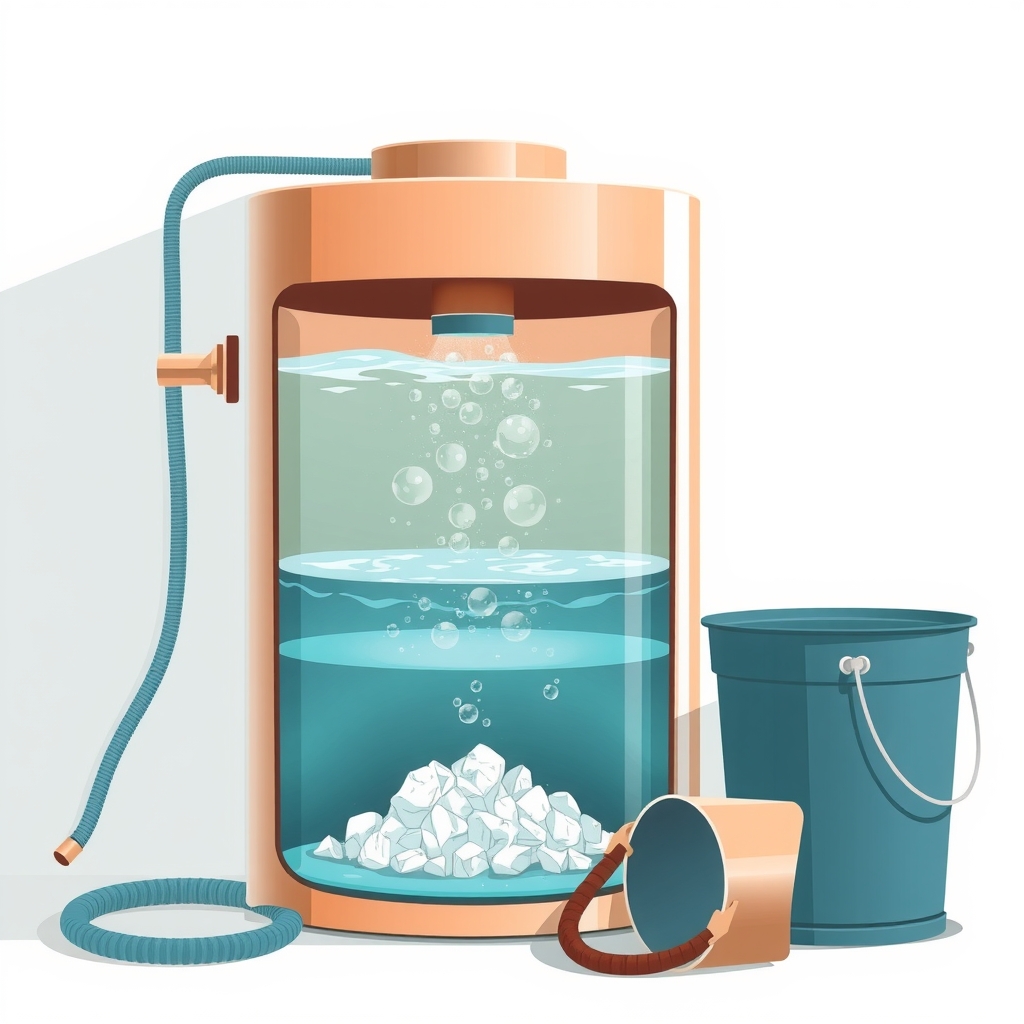
A tank water heater that suddenly sounds different is worth a few minutes of listening before you do anything else. Some noises are ordinary. Some are a nuisance you can fix with a hose and a bucket. A few mean the unit should be shut off and looked at by a licensed pro.
This edition is a decoder: match the sound, do the safe check, and know where the line is. Manufacturers' own help pages are the sources throughout, and when your unit's manual says something different, follow the manual.
What's going on
Start by noticing when the sound happens. A noise that stays the same whether or not water is running likely comes from inside the tank, according to a manufacturer's consumer guide. A noise that shows up only when a tap opens or shuts points more toward the pipes.
| Sound | Likely meaning | Your move |
|---|---|---|
| Ticking, humming, gurgling, soft ignition sounds | Normal when quiet, brief and regular | Nothing |
| Popping or rumbling | Sediment, the most common cause. Water trapped under hardened minerals boils, and steam bubbles escape | Flush the tank |
| Crackling | Sediment, or a reaction between an aluminum anode rod and excess chlorine | Flush, then re-listen |
| Knocking or banging that follows taps | Often water hammer in the plumbing, not the heater | Check the pipes, ask a plumber about an arrestor |
| Loud, continuous banging | Possible dangerous pressure or a failing part | Shut off and call |
| Hissing or sizzling | Can be the relief valve working briefly. With a leak or drip, a gas smell, or repeated relief valve discharge, it is a problem | Occasional and brief: watch it. Otherwise see the stop section |
| Screeching | Possibly a failed blower motor bearing | Shut off and call |
The popping and rumbling story is mineral buildup. Hard water carries dissolved calcium and magnesium that collect inside appliances, as one manufacturer's hard water article explains. Another manufacturer's guide to noises says sediment is the most common cause of these sounds, and that banging often comes from water hammer rather than the heater. A manufacturer cited by its noise page says knocking is likely water slamming into internal shutoff valves.
Popping is not an emergency. One maker says it is not immediately dangerous, but it shows the heater is working harder. Sediment also acts like insulation at the bottom of the tank, which lengthens heating cycles and raises energy use. The Department of Energy says water heating can account for 14%-25% of home energy use, so a sluggish heater costs you.
What you can safely check or fix
Before flushing, do the easy checks. Listen for whether the sound follows the taps. Check the age on the tank's label. Look at the thermostat: the Department of Energy recommends a 120°F setting to save energy and avoid scalding. A manufacturer notes that flushing is low-risk, can be tried any time, and doubles as a diagnostic: if the noise goes away, sediment was the cause.
A flush is a homeowner job on a tank unit, with these limits. Skip it if the tank is old and has never been flushed, because one manufacturer warns that hardened sediment in that situation could lead to leaks or damage when disturbed. Tankless units are different: they need descaling, not this procedure.
You need a garden hose and a bucket or a drain spot. Follow your manual where it differs, especially for the relief valve, the refill and any gas control.
- For an electric unit, turn off the electricity at its switch or breaker.
- For a gas unit, turn the gas control to its off setting as your manual describes. Do not open or adjust any gas fitting.
- Close the cold water inlet valve to the tank.
- Let the water cool for several hours before draining. Hot water can scald.
- Open a hot water tap somewhere in the house so the tank can drain.
- Attach a garden hose to the drain valve.
- Run the other end of the hose to a floor drain or outdoors.
- Once the water has cooled, open the pressure relief valve.
- Open the drain valve.
- Drain the tank completely.
- Watch the water coming out and keep draining until it runs clear.
- Close the drain valve.
- Close the pressure relief valve.
- Remove the hose.
- Open the cold water inlet valve to refill the tank, with the drain closed and the hot tap still open.
- Leave the hot tap open until water runs from it steadily, which lets air out, then close it.
- Only once the tank is full, turn the electricity back on at the switch or breaker. An electric element can burn out if it runs dry.
- For a gas unit, relight or restore the gas only by following the manufacturer's manual. If the unit will not relight, or you smell gas, stop and call a pro.
- Listen again to see whether the noise has changed.
How often should you repeat it? One maker recommends once a year for most households. With hard water, it suggests every 6 months. Another manufacturer says to flush at least yearly and notes that anode rods last about 5 years, which is a reason to have the rod inspected.
Where to stop and call a pro
Stop the flush and call if the drain valve will not open or leaks, or if you are unsure about the gas or electrical parts. If the noise continues after a flush, or the unit is 8 to 12 or more years old, a manufacturer lists those as signs to bring in a pro. A licensed plumber can inspect the system and perform a proper flush.
Hissing needs care. Hissing from the temperature and pressure relief valve can be the safety system doing its job, but frequent activation needs a checkup. Hissing near a gas valve or burner with a gas smell may be a leak: shut off the gas and call a professional.
Stop here: Hissing or sizzling with a leak, drip or gas smell, a relief valve that keeps discharging, or any gas or burner work needs a licensed pro, not a DIY fix.
For those sounds, turn off the power or gas and arrange an inspection. Loud, continuous banging and persistent screeching also belong here. Gas lines, burners and electrical wiring are licensed work.
What to tell the pro
A clear description saves a visit's worth of guessing. Have these ready:
- The noise: popping, rumbling, crackling, knocking, hissing or screeching, and whether it changes when water runs.
- When it started: a sudden change or a slow build.
- Tank age: from the label, since age affects the advice.
- What the flush brought out: clear water, cloudy water, or gritty sediment, and whether the noise changed afterward.
- Any trouble: a drain valve that stuck, any drips, or relief valve discharge.
For help choosing a pro, home-services-reviews.com covers hiring advice, and your state licensing board's lookup is the place to check a license.
Quick answers
Is a popping water heater dangerous?
Popping is usually sediment trapping steam bubbles, and one maker says it is not immediately dangerous but shows the heater is working harder. Flushing is the usual first fix.
How often should I flush my water heater?
One manufacturer recommends once a year for most households, and every 6 months if you have hard water. Tankless units need descaling instead.
When is a noise a reason to call a plumber now?
Hissing with a leak or a gas smell, a relief valve that keeps discharging, or persistent screeching means turning off power or gas and calling a pro.
Sources
- The Ultimate Guide to Water Heater Noises: What’s Normal (and What Isn’t) - Rheem Manufacturing Company
- How Often To Flush Your Water Heater (And How To Do It) - Rheem Manufacturing Company
- Hot Water Heating Making Noises | A.O. Smith
- How Hard Water Affects Your Water Heater (And What You Can Do About It) - Bradford White Water Heaters
- Home Energy Checklist | Department of Energy
- What to Do If Your Water Heater is Making Noise?