
Water heater leaking: follow the water before you call a plumber
A triage guide for the puddle by your water heater: where the water is coming from, what is safe to check tonight, and which leaks mean a plumber.
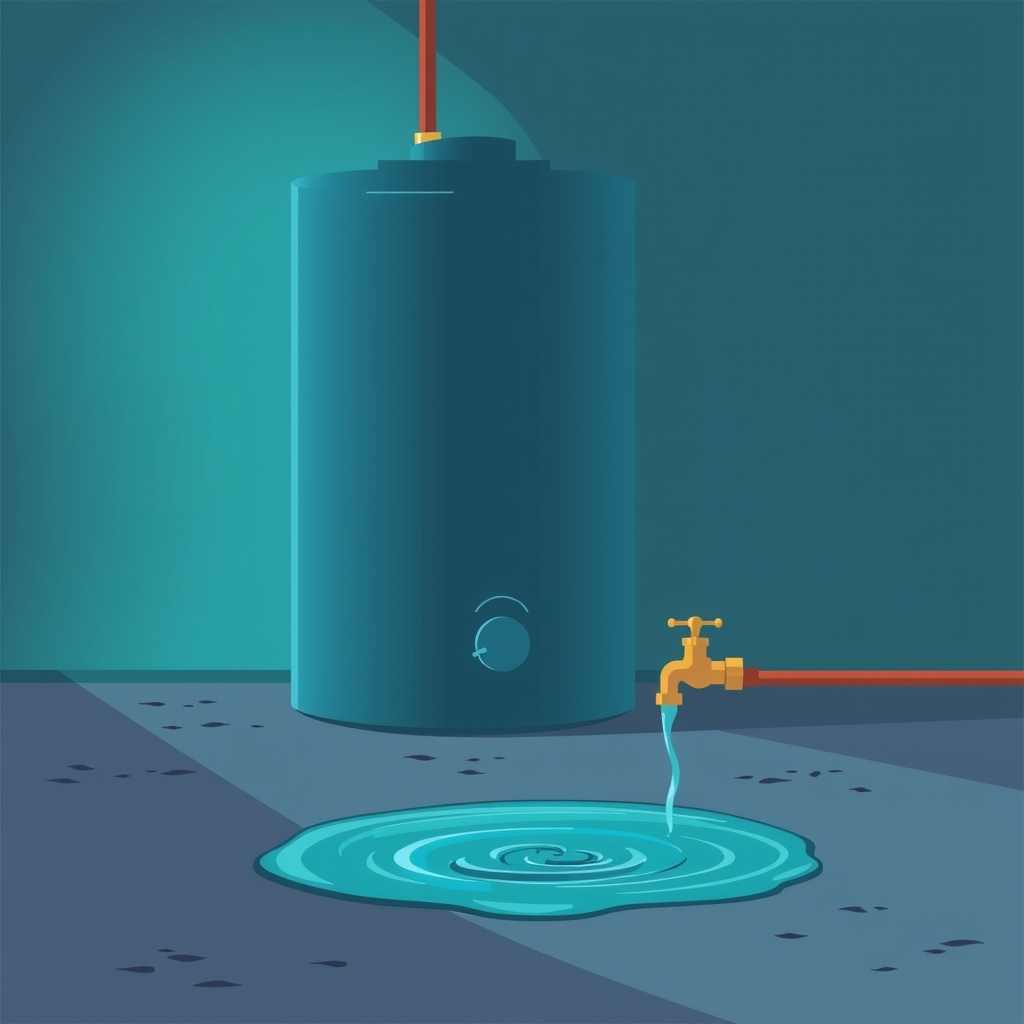
A puddle around the water heater sends most people straight to the worst guess: the tank has failed. Sometimes that is true. Often it is something smaller, like a fitting that is weeping at the top or a valve that is releasing pressure. The way through is to stop guessing and follow the water back to where it starts.
This guide works from the top of the heater to the bottom. You will turn the heater off, shut off the water, dry the area and watch where the first bead forms. A few sources are fine to look at yourself. Others are a clear signal to stop touching things and call a licensed plumber.
One rule comes before everything else. If you smell gas, do not investigate: leave the house and call the gas company and the fire department from outside or from a neighbor's phone. Gas lines are a job for a licensed pro, always.
The guidance on the relief valve, the expansion tank and the tank lining comes from a water heater maker's own safety page, linked below. Where a step is just turning things off, follow your unit's manual if it says something different.
What's going on
A tank water heater keeps heated water under pressure, and it has a few places where water can escape. Which spot is wet tells you how serious the problem is.
Two things matter most. The first is the relief valve and its discharge pipe, a safety device that opens when conditions inside the tank go too far. The second is pressure. Water expands when it is heated, and without an expansion tank the pressure in the system rises. The water heater maker's safety page recommends an expansion tank for that reason, so a relief valve that drips now and then may be reacting to pressure. The same page says a leaking relief valve may also point to an unsafe temperature or pressure situation, and it advises talking to a professional plumber.
The tank is the part that gets no home repair. Inside it, an anode rod protects the glass lining and the tank from corrosive incoming water. When that protection is gone, the tank can corrode and eventually leak from the body. Look for a date on the rating label and write it down.
Here is the decision table. Dry everything first, then watch for the first drop.
| Where the water starts | What it usually means | Tonight |
|---|---|---|
| Top fittings (pipe connections) | A weeping connection, or water running down from above | Dry it and see whether it returns. Leave the fitting alone and report it |
| Pipe running down from the relief valve | The relief valve is discharging, possibly from heat or pressure | Do not cap or plug the pipe. Hot water or steam means leave the area and call a plumber |
| Drain valve near the bottom | A valve that is not sealing | Leave it closed, dry it and report it. Do not drain the tank tonight |
| Tank bottom or seams, no valve involved | The tank itself may be leaking | Shut off power or gas and water, then call a plumber |
What you can safely check or fix
These steps stay on the safe side of the line: turning things off, looking and writing things down. Nothing here touches a gas line, wiring, the relief valve or the inside of the tank. They are the same shut-off steps a plumber will ask about on the phone. If the manual for your unit gives different shut-off directions, follow the manual.
- Smell for gas, and if you smell it, leave the house and call the gas company from outside.
- If the heater is gas, turn its gas control to the off setting.
- If the heater is electric, switch its breaker off.
- Close the cold water supply valve on the pipe feeding the heater.
- Put a towel or tray down so the floor and nearby items stay dry.
- Dry the tank sides with a towel.
- Dry the top fittings with a towel.
- Dry the drain valve with a towel.
- Hold a dry paper towel near each spot and watch for the first bead of water.
- Match the first bead to the table above.
- Leave the relief valve and its discharge pipe exactly as they are.
- Move gasoline and other flammable vapors and liquids away from the heater.
- Take a photo of the wet spot and of the label on the tank.
- Write down the time you shut things off.
The maker's safety page says flammable vapors and liquids should not be stored or used near a water heater, which is why one step covers moving them. This guide deliberately does not walk you through draining or flushing the tank. Draining hot water through a hose can scald, and the right procedure (cooling time, where the water goes, closing the valve and refilling) belongs to your unit's own instruction manual. If you want that done, a plumber can do it.
Where to stop and call a pro
Several outcomes mean the job is no longer yours. A leak from the tank body is one, because there is no safe home repair for a tank. A relief valve that keeps discharging is another: a leaking relief valve may indicate an unsafe temperature or pressure situation, and the maker advises consulting a professional plumber. The same advice covers overheating, where a high-temperature cutoff can activate when the water temperature goes far beyond its normal range.
If you see steam or very hot water coming from the relief valve pipe, treat it as an emergency. Leave the area and keep others away. Turn off the gas control or the breaker only if you can reach it without walking up to the heater. Do not spray the heater or try to cool it with water. Then call a plumber, and call the fire department if you cannot get away from the heat or if you smell gas.
Stop here: A leaking tank, a relief valve that keeps discharging, hot water or steam from the relief pipe, an overheating heater, any gas smell or gas line work, and anything inside the electrical supply to the heater need a licensed plumber or other licensed pro. Do not replace the relief valve or the anode rod yourself.
Setting up an expansion tank also belongs to a plumber, because it ties into the water supply and the pressure of the whole system. Gas connections and wiring are never homeowner projects.
To find a licensed plumber in your state, use the Find a Pro search on this site, which links each listing to the state's own license lookup. For hiring advice, see home-services-reviews.com, which covers that so this guide does not.
What to tell the pro
A clear description saves a trip and helps the plumber bring the right parts. Have these ready when you call:
- Where the water first appeared: top fitting, relief-valve pipe, drain valve or tank bottom.
- Whether it is a drip, a steady stream, hot water or steam.
- Whether you smelled gas, and whether you left and called the gas company.
- Whether the heater is gas or electric, and roughly how old it is from the label.
- What you turned off (gas control or breaker, cold water supply) and at what time.
- Whether the leak slowed or stopped after you shut off the water.
- Whether the discharge pipe on the relief valve is uncapped and untouched.
- Whether you have an expansion tank, if you know.
- Any past work on the relief valve or the anode rod, if you know.
- The photos you took of the wet spot and the label.
After tonight
Once the leak is handled, keep gasoline and other flammable vapors and liquids well away from the heater. If you rent, tell your landlord about the leak before you change any settings, and ask what the lease says about repairs.
The Consumer Product Safety Commission keeps lists of gas water heater recalls and electric water heater recalls. One gas tankless recall in October 2025 involved exhaust ducts that can crack and leak carbon monoxide, and the agency tells owners of recalled units to stop using them right away. Check your model there if the heater has been acting oddly.
Quick answers
Is it safe to cap a leaking relief valve pipe?
No. Leave the valve and its pipe alone. A leaking relief valve may point to an unsafe temperature or pressure situation, and the maker advises consulting a professional plumber.
Why might the relief valve drip when nothing is broken?
Water expands as it heats, and without an expansion tank the pressure rises. The maker recommends an expansion tank for that reason.
What protects the inside of the tank from corrosion?
An anode rod protects the glass lining and the tank from corrosive incoming water. Replacing it is a plumber's job.