
Outdoor faucet freeze protection: a timeline for before the first freeze
Shut off the water to the outdoor line, disconnect and drain the hose, cover the spigot, and know where a frozen pipe becomes a plumber's job.
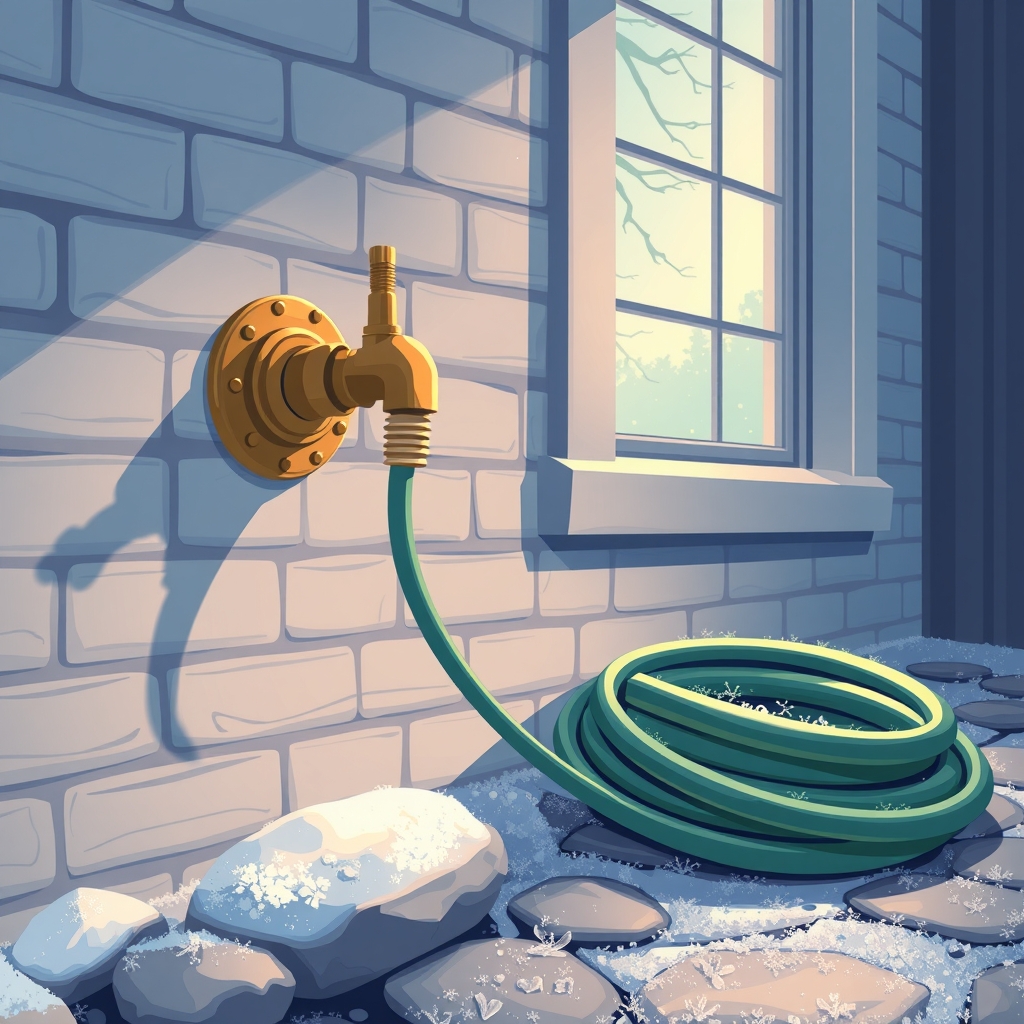
A freeze is on the way, and the outdoor faucet is one of the first places it can do damage. The useful work takes a few minutes and needs no special tools: stop the water to that faucet, get the hose off, let the line drain, and cover the spigot. This guide lays it out as a timeline: what to do today, what to do tonight, and what to do after a freeze.
It also explains why a frost-free faucet still needs attention, and it marks the line plainly. Thawing a frozen pipe and any repair inside the wall are not homeowner jobs. If a pipe has frozen, the safe move is to shut off the water and call a licensed plumber.
What's going on
Water expands as it freezes. Portland's water bureau says pipes can freeze or break at or below freezing, and that burst pipes can cause significant flooding and damage. Greeley says a single overnight freeze can burst faucets and pipes.
The outdoor faucet, often called a hose bib or spigot, sits in the cold while its pipe runs back into the house. A hose left attached makes the problem worse. Spring Hill says a connected hose can freeze and potentially damage the faucet and pipes it is attached to, and Fortville explains that detaching the hose lets the water drain from the pipe. Spring Hill also gives a sense of timing: pipes can start freezing when temperatures drop below 20°F, with the greatest risk in the single digits.
A pipe that has frozen may already be cracked, and Fortville warns it may gush when it thaws. That is why the damage often shows up inside the wall, after the ice melts, rather than at the spigot.
What you can safely check or fix
Everything in this section is work a homeowner can do without a license, and none of it involves cutting, soldering or opening a wall. It comes down to four jobs: shut off, disconnect, drain, cover. Be honest about the sourcing: the steps below come from the water utilities and city pages linked here, and the one manufacturer page available to us covers frost-free faucets, not the basic steps. If you have the faucet maker's instructions, they come first.
The water goes off first. Portland says to turn off a separate outdoor shutoff valve and then open each outdoor spigot to drain what remains. Portland also says such valves may be at the front of the house where the hose connects, in the basement near the water heater, or in the garage.
Today
- Turn off the separate shutoff valve for the outdoor line, if your house has one (Portland).
- Disconnect each hose from each outdoor faucet (Indiana's consumer counselor).
- Empty each hose.
- Store the hoses indoors or in the garage.
- Open the outdoor spigot so the remaining water drains out.
- Shut off any irrigation connections for the winter (Greeley).
- Mark the master shutoff valve with bright paint or a tag (Fortville).
- Tell everyone in the household where the master shutoff is.
Tonight
- Cover the faucet with a hose bib cover, or with newspaper or rags wrapped in plastic wrap (Portland).
- If there is no separate shutoff valve for the outdoor line, use an insulated cover on the faucet (Oak Harbor).
- In freezing weather, leave a slight, steady drip running at an indoor faucet, since moving water is less likely to freeze (Portland).
After a freeze
- Look at the faucet, and at the wall or ceiling inside near it, for drips or wet spots.
- If anything looks frozen or is leaking, shut off the master valve (Indiana).
- Call a licensed plumber.
Where to stop and call a pro
Stop if the faucet keeps dripping or flowing after you shut off the water, if the line will not drain, or if you cannot find any shutoff valve and the faucet is not already protected. Those are signs the setup needs someone licensed to look at it.
Stop here: a frozen or burst pipe inside the wall, thawing a frozen pipe, or any repair or replacement of the faucet's pipe needs a licensed plumber.
The sources agree. Indiana's consumer counselor says that if pipes freeze you should shut off the master valve and call a licensed plumber, and it warns that thawing a pipe without a plumber's help or advice can cause serious, expensive damage. Greeley tells readers to call the plumber first and then find the master shutoff. On the faucet itself, the faucet manufacturer's instructions say to contact a qualified licensed contractor when the sillcock malfunctions or fails, rather than taking it apart.
One more case is not yours to fix: if the utility's meter box may be frozen, Harrisonburg says homeowners are not responsible for keeping meter boxes freeze-proof and should call Public Utilities.
To find a licensed plumber in your state, use the Find a Pro search on this site, which links each listing to the state's own license lookup.
What to tell the pro
A plumber can work faster with a clear account. Say what the faucet looks like and whether a hose was attached when the freeze hit. Say whether you found a separate shutoff for the outdoor line, where it is, and whether you turned it off.
Say whether you shut off the master valve, and when. Tell them if you can see water inside, on a basement ceiling or on the wall near the spigot. If you know whether the faucet is a standard one or a frost-free type, say so, and mention if you think it was installed poorly: the faucet manufacturer's instructions note that poor drainage from improper installation can trap water and cause freezing damage.
Do not describe any thawing you tried, because you should not have tried any; if you did, say so plainly so the plumber knows what the pipe went through.
Frost-free vs. standard faucets
A frost-free faucet, also called a frost-free sillcock, is the kind many people assume needs no attention. The manufacturer's instructions say otherwise. They state that frost-free sillcocks resist freezing only when the inlet connection is in a heated space, and that you should always remove the hose in freezing temperatures so the faucet can drain completely. They also warn that poor drainage from improper installation can trap water and cause freezing damage.
The same page quotes a plumbing code section, IRC P2903.10, which calls for an accessible stop-and-waste valve inside the building on hose bibs subject to freezing, frost-proof types included. That is the kind of inside shutoff that the steps above ask you to look for.
How to tell which type you have: none of the sources we can cite gives a reliable way to identify it from the outside, so we will not offer a look-and-know test. The safe approach does not depend on knowing. Treat every outdoor faucet the same way: remove the hose, shut off the line if there is an inside valve, drain it, and cover it. If you want the type confirmed, a licensed plumber can tell you.
Quick answers
What is the single most useful thing to do before a freeze?
Disconnect and drain the hose. A hose left attached can freeze and damage the faucet and the pipe it connects to, and a hard overnight freeze can burst them.
Does a frost-free faucet need winterizing?
At minimum the hose has to come off. The manufacturer's instructions say frost-free sillcocks resist freezing only when the inlet connection is in a heated space, and to always remove the hose in freezing temperatures.
What if the pipe is already frozen?
Shut off the master valve and call a licensed plumber. Thawing a pipe without a plumber's help or advice can cause serious, expensive damage.
Sources
- Prepare your plumbing for winter weather | Portland.gov
- Avoid Frozen Water Pipes | City of Greeley
- Frozen Pipes | Town of Fortville
- Prevent Frozen Pipes | Spring Hill, KS - Official Website
- Indiana Office of Utility Consumer Counselor: Preventing Frozen Pipes
- How to Install the T-550 | Legend Valve
- Cold Weather Hints | City of Harrisonburg, VA
- Cold Weather Tips | Oak Harbor, WA