
Frozen pipes: what to do tonight, and how to thaw one safely
A short evening plan to keep pipes from freezing before the first hard freeze, plus a slow, safe thaw procedure that avoids both a flood and a fire.
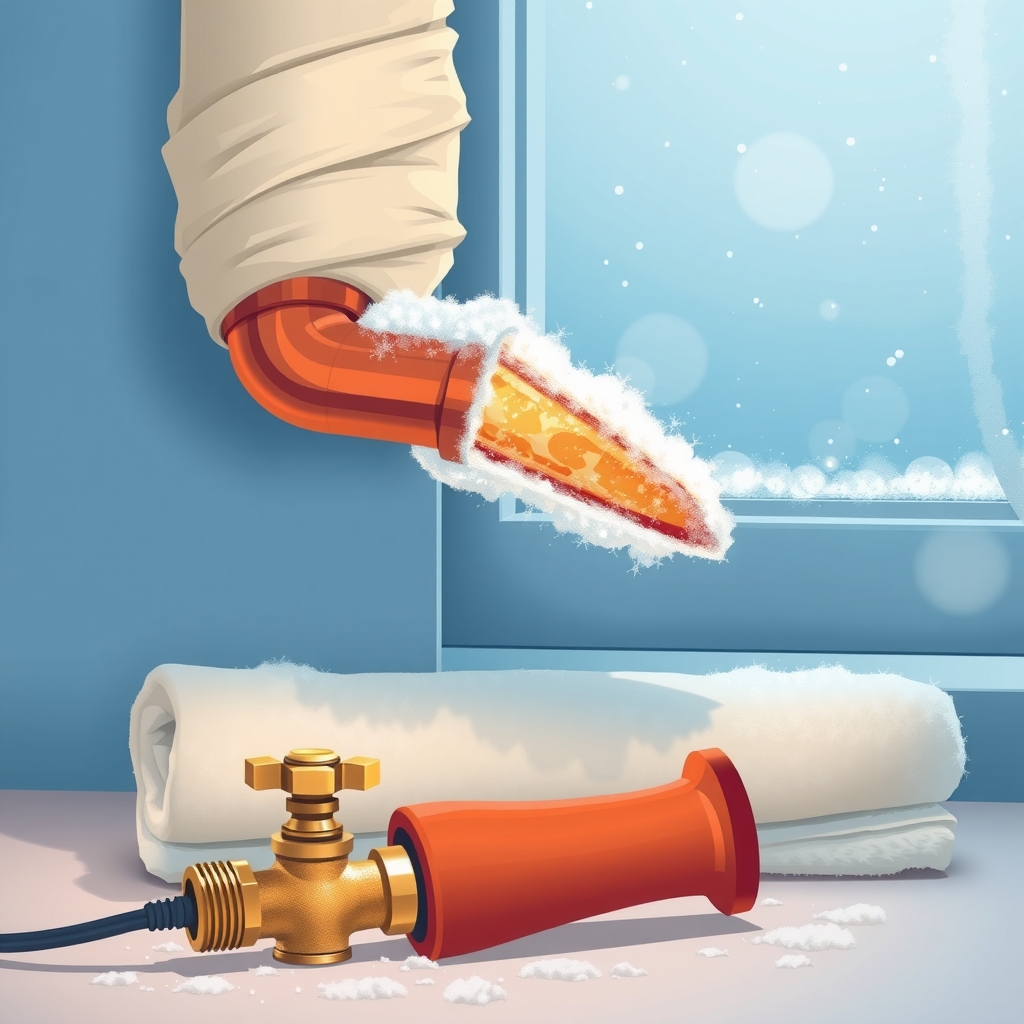
If it is going to be cold tonight, or a tap in your house has gone dry right now, the stakes are simple: a pipe that freezes can burst, and a burst pipe puts water in your walls and floors. EPA says extreme cold and ice can lead to burst pipes.
If a tap is dry now, go straight to the thaw steps in "What you can safely check or fix". If the freeze is still ahead of you, the prevention list right below them takes about one evening and a flashlight. Either way, work slowly and keep open flame out of it. The panic moves for a frozen pipe tend to swap a water problem for a fire problem.
This guide covers plumbing a homeowner can handle without a license. Anything past that is marked clearly.
What's going on
Water in a supply line that sits in cold air can freeze. The pipes most at risk are the ones in unheated spaces and along exterior walls. NWS New York names basements, crawl spaces, attics and garages as places where supply lines should be insulated, and EPA likewise says to insulate water lines along exterior walls so freezing is less likely.
A frozen section is a blockage, and pressure builds between the faucet and the ice. The National Weather Service explains that a dripping faucet relieves that pressure. That is why a slow drip helps even when the water is barely moving: the pressure has somewhere to go.
The usual sign of a frozen pipe is a tap that gives you little or nothing in freezing weather. Treat it as a pipe that could split, and thaw it gently.
What you can safely check or fix
If a pipe is frozen right now, follow these steps in order. Do not skip the first two.
- Find your main water shutoff, so you can close it fast if the pipe splits. NWS New York advises knowing how before a rupture.
- Keep the hair dryer and its cord away from standing water, and use it with caution, as NWS Boston puts it.
- Open the faucet on the frozen line, so melting water and pressure can leave.
- Remove any insulation from the section you are thawing.
- Apply hot water or hot wet towels, starting where the pipe is most exposed to the cold, per NWS Boston.
- Or move a hand-held electric hair dryer slowly along the pipe. EPA and NWS Albuquerque both say to thaw slowly this way.
- Never use a torch. Both agencies say so plainly.
- If you see a split or spraying water, close the water valves right away, as EPA advises, then call a plumber.
- After a burst, dry wet walls and floors completely, and fix the leak promptly, per EPA.
Tonight, before the freeze, work through this prevention list.
- Find your main water shutoff and practice closing it.
- Learn where your other water valves are, since EPA advises knowing them before a pipe bursts.
- Shut off the outdoor spigots before freezing temperatures arrive.
- Drain the outdoor spigots, as EPA advises.
- Wrap exposed pipes in insulation, or in layered newspaper covered with plastic to keep moisture out, as NWS Boston describes.
- Seal cracks and holes in outside walls and foundations near pipes with caulk, per NWS New York.
- Open the cabinet doors under sinks on exterior walls, so room warmth reaches un-insulated pipes.
- Move harmful chemicals out of the reach of children and pets before you leave those cabinets open.
- Let a trickle of warm water run from the faucet farthest from the meter, or from one that has frozen before.
- Let taps on exterior walls drip continuously if the cold is extreme or the power goes out, per EPA.
- Keep the heat on overnight.
- If you are going away, leave the thermostat at 55 degrees or higher, as NWS New York advises.
Where to stop and call a pro
Prevention and a gentle thaw are homeowner jobs. Repair is not always one. Call a licensed plumber when a pipe has split, when water keeps coming after you have closed the valves, or when you cannot find or close the shutoff. EPA says to shut off water valves if a pipe bursts, and the repair itself is plumbing work.
Stop here: a burst or cracked pipe, or any pipe that needs cutting, soldering or replacing, is a job for a licensed plumber.
Also stop if a pipe will not thaw with warm water, wet towels or a hair dryer. Do not escalate to a torch or more heat. Dry the wet area while you wait, since EPA says to dry everything completely after a burst.
What to tell the pro
You do not need a script. A few plain facts let the plumber judge the job over the phone:
- Where the pipe froze or burst: which wall, room, basement, garage or crawl space.
- Where your main shutoff is, and whether it is closed now.
- Whether water is flowing, leaking or spraying, and from where.
- What you tried: hot towels, a hair dryer, or nothing yet. Say plainly that you used no torch.
- Whether the pipe was insulated, and whether electric heat tape is on it.
- What is wet, and whether you have started drying it.
The shutoff matters most. NWS New York says to know how to close the main supply for exactly this moment.
Keep heat sources away from the pipes
Three points bear directly on freeze work. First, never heat a home with a stove, oven or grill, which NWS New York and USFA both advise against. Second, if you run an electric space heater near a cold spot, plug it straight into a wall outlet, not an extension cord or power strip, and keep it 3 feet from anything that burns, per CPSC.
Third, if a pipe already has electric heat tape, check it. CPSC says damaged or cracked tape should be replaced, and bare wires or charring call for a new one. Tape goes directly over the pipe, never on top of pipe insulation, and it should not be lapped over itself unless the maker permits it. Any insulation over it must be non-flammable, because over-insulating can start a fire.
Tonight, in short
Know your shutoff, drain the outdoor spigots, wrap and caulk the cold spots, open the cabinets, let the right tap drip, and keep the heat on. If a pipe does freeze, open the faucet and thaw it slowly, with no torch. If it splits, close the valves and call a licensed plumber. To find one, use Find a Pro, the state and trade search on this site, which links each license to the state's own lookup.
Quick answers
What can I do tonight to keep pipes from freezing?
Find your water shutoff, drain outdoor spigots, insulate and caulk around exposed pipes, open cabinet doors, and let a tap on an exterior wall drip. Keep the heat on too.
How do I thaw a frozen pipe without starting a fire?
Open the faucet, then warm the pipe slowly with hot wet towels or a hair dryer, starting where it is most exposed to cold. Never use a torch.
What if the pipe has already burst?
Shut off the water valves, dry the wet walls and floors completely, and call a licensed plumber for the repair.
Sources
- Winter Weather and Indoor Air Quality | US EPA
- NWS Boston - Winter Weather Preparedness Week
- Home Preparedness Tips for Prolonged Frigid Cold
- Emergency Preparedness: Winter Weather
- Check Heat Tapes, Cables For Possible Fire Hazards | CPSC.gov
- There’s a Chill in the Air – Stay Warm Safely – Be Cautious When Using Generators, Furnaces and Space Heaters | CPSC.gov
- Heating Fire Safety