
Dryer runs but clothes stay damp: what to check before you call a tech
A dryer that spins without heating often has a settings, lint or vent cause you can check safely; heating parts, wiring and gas belong to a pro.
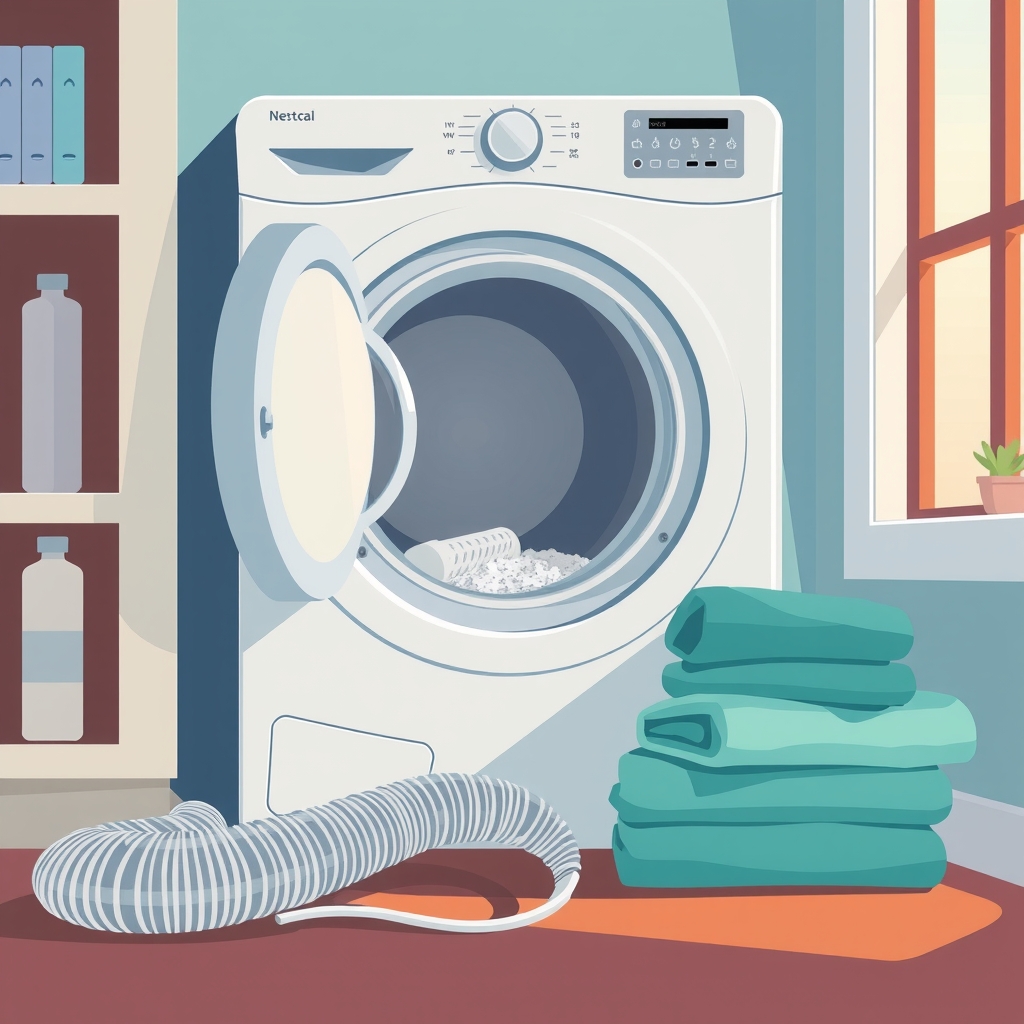
You open the dryer after a full cycle and the load is cool and damp. The drum turned, the timer ran down, and nothing dried. That points to one of two problems, and telling them apart saves time. Either the dryer never made heat, or it made heat but could not push the moisture out. Manufacturer help pages and a federal safety agency cover both cases, and the first checks cost nothing and need no tools.
This guide walks through the checks a homeowner or renter can do safely, then marks the point where the work goes to an appliance repair pro. The sources are the Whirlpool dryer-not-heating page and the Frigidaire owner article. If you need a licensed pro in your state, the Find a Pro search on this site links each listing to the state's own license lookup.
What's going on
A dryer has two separate jobs: tumbling the drum and making heat. They run on different parts, so one can work while the other does not. Manufacturers describe several common reasons the drum turns without warmth.
The first is the setting. The Whirlpool page says Air Only or Air/Fluff cycles never add heat. The Frigidaire article says Air Fluff, or a temperature setting without heat, makes the dryer tumble cold. The GE support page says the cycle should be a real dry cycle, not fluff or cool down.
The second is power. Frigidaire says an electric dryer has two house circuits or fuses, and if one is tripped or blown the drum may turn without heat. Whirlpool says electric dryers need a separate 30-amp circuit with two breakers, one for the motor and one for the heating element. GE says an electric dryer may run on 120 volts but will not heat without a 208V/240V supply. That is a wiring problem, covered under the pro section below.
The third, for gas dryers, is the fuel. Whirlpool's gas dryer guide says a closed gas valve lets the drum turn without heat.
The fourth is airflow. Whirlpool says a dryer that heats but dries slowly likely has a vent problem or restricted airflow. A clogged vent is also a fire concern: the Consumer Product Safety Commission advises preventing dryer fires by periodically cleaning the vent, exhaust duct and lint screen or filter.
What you can safely check or fix
Work from the simplest check to the most involved. Stop at any step that asks for something you are not comfortable doing, and read the next section. These steps use only the dryer itself: nothing here involves the breaker panel, wiring or gas.
- Choose a regular dry cycle with a heat setting, not air fluff, cool down or a no-heat temperature, as the GE support page and the Frigidaire article describe.
- Empty the drum completely.
- Start a timed cycle with heat on.
- Let the cycle run for 5 minutes.
- Reach into the drum and feel for warmth, which is the heat test on the Whirlpool page.
- Unplug the dryer before any hands-on work, since Whirlpool tells owners to unplug it before checking terminal screws.
- Pull out the lint filter and clear off the lint. The CPSC advises periodic cleaning of the lint screen or filter to prevent dryer fires.
- Move anything that blocks the front of the dryer, because GE says the front must stay clear for adequate airflow.
- Clean the exhaust duct and the vent to the outside, which the CPSC advises doing periodically and Whirlpool says should happen every one to two years or as needed. Follow your dryer's own instructions for disconnecting the duct.
- If lint is packed in a run you cannot reach, hand the vent to a professional vent cleaning service, which Whirlpool says can inspect the vent for obstructions.
- Plug the dryer back in and run another heated test cycle, so you know whether the fix worked.
If you have a gas dryer, the fuel and valve are not a home fix. Problems with the gas valve or gas service go to the gas company or a pro, as covered next.
Where to stop and call a pro
If the checks above did not bring the heat back, the cause is probably inside the dryer, in the home's wiring or in the gas supply. GE says service may be needed if its suggested checks do not fix the problem, and Whirlpool's gas dryer guide offers to schedule service if the problem persists.
Stop here: Replacing or testing a heating element, thermal fuse, gas valve or igniter, and any work on the power cord, terminal block, wall outlet, circuit wiring, breaker panel or gas line, is for a licensed pro. Do not open the dryer's electrical or gas parts yourself.
A few situations point this way:
- Tripped breaker or missing 240 volts. Whirlpool says a tripped breaker on the heating-element circuit may stop the heat, and that you should consult a qualified electrician if an electric dryer lacks 240-volt power. Frigidaire says a qualified electrician should verify 240 volts at the outlet. Anything involving the breaker panel or the dryer circuit is an electrician's job, not a homeowner step.
- Burned or loose connections. GE says the power cord may have burned, broken or loose connections at the rear terminal block, and that burned, broken or frayed wires or terminals require replacing both. That is repair work, not a home fix.
- Gas. A gas line, valve or igniter problem needs a licensed pro. Frigidaire says to call the gas company if natural gas service is interrupted, and to refill or replace an empty LP tank through whoever supplies it. Do not adjust the dryer's gas valve or gas line yourself.
- A stubborn vent. If lint is packed in a long or hard-to-reach run, a professional vent cleaning service can inspect it.
What to tell the pro
A clear description shortens the visit and helps the pro bring the right parts. Have these ready:
- Whether the dryer is electric or gas, and for gas, whether it uses natural gas or LP.
- What you saw: drum turns but no heat at all, or heat that is weak and slow.
- The result of the 5-minute heated test in an empty dryer.
- Which cycle and setting you used, and that it was a real dry cycle rather than fluff or cool down.
- Whether a breaker has ever tripped on the dryer, if you know. Leave the panel itself to an electrician.
- When you last cleaned the lint filter, and whether the vent to the outside has ever been cleaned.
- Any burning smell, scorch marks, or a plug or outlet that looked discolored.
Quick answers
Why does my dryer spin but not heat?
Common causes are a no-heat cycle such as air fluff, a tripped or blown circuit on an electric dryer, or a closed gas valve on a gas dryer. The circuit and gas causes are jobs for an electrician or a pro.
How do I test whether my dryer is making heat?
Empty the drum, run a timed cycle with heat for 5 minutes, then reach in and feel for warmth.
What if the dryer heats but clothes dry slowly?
Whirlpool says that likely means a vent problem or restricted airflow, so clean the lint filter and the vent, or have a vent cleaning service inspect it.