
Dead outlet and GFCI won't reset: what to check before you call an electrician
A step-by-step way to tell a tripped breaker from a downstream fault or a failed GFCI, using manufacturer and CPSC instructions, and where the safe checks end.
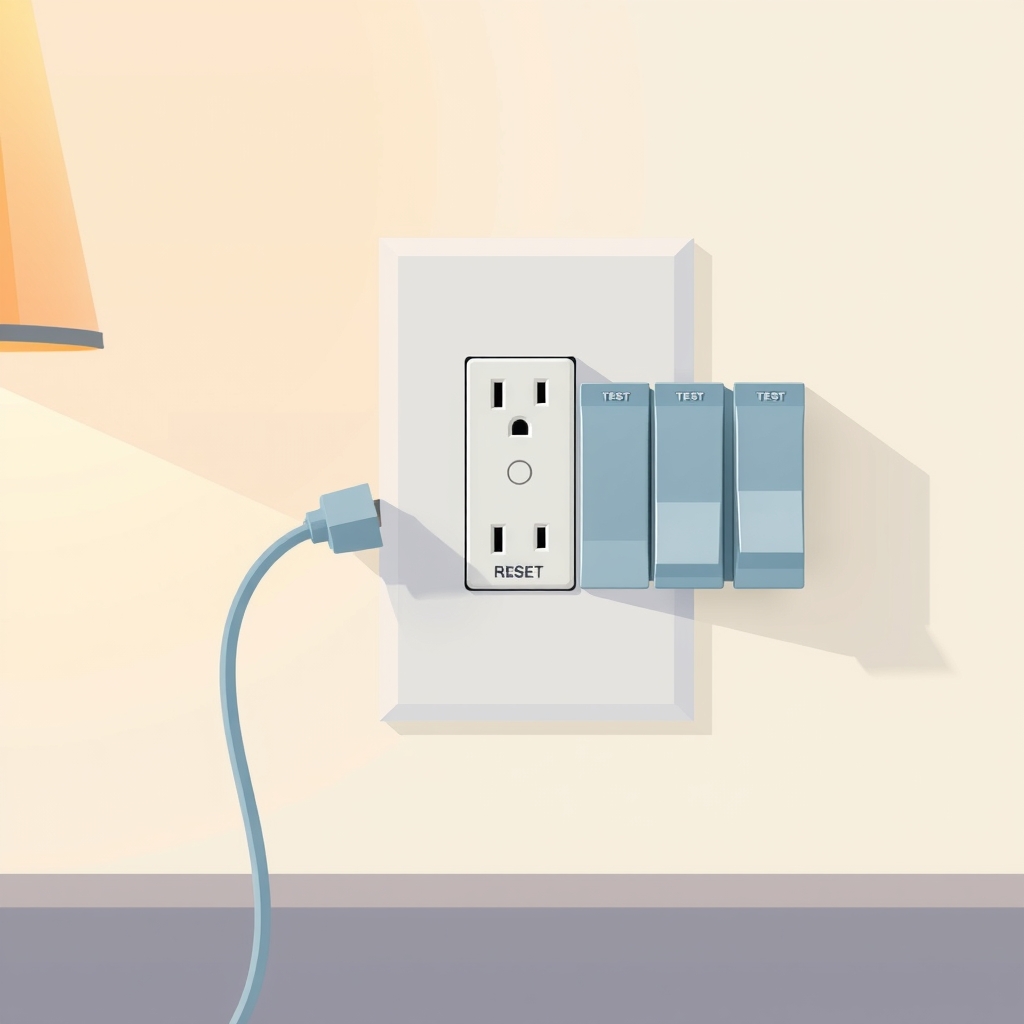
An outlet with no power is annoying. A GFCI that clicks, refuses to reset and leaves the outlet dead is more confusing, because the device may be doing what it was built to do, or it may have failed. The checks below help you tell which. This guide walks through what a homeowner can do without opening anything, working from the panel outward: breaker first, then what is plugged in, then the device itself. Each check rules out one cause. If none of them gets the outlet back, you will know enough to hand the problem to a licensed electrician with a clear description.
What's going on
A GFCI has a built-in lockout. According to the manufacturer's instructions, the reset lockout keeps the outlet from resetting when conditions are not safe. So a GFCI that will not reset is not always broken. It may be refusing on purpose.
The manufacturer lists several reasons a GFCI will not reset. A tripped breaker or a loose connection upstream can leave it with no power at all. A continuing current imbalance, which is a ground fault, keeps it locked out. Reversed line and load wires will stop it from resetting. Age, moisture or an internal failure can do the same. For a GFCI that was recently installed or replaced, the instructions say incorrect wiring is a likely culprit, with line and load reversal the common mistake.
There is also a layout point that explains many dead outlets. One GFCI can protect other outlets downstream of it. When it trips, those outlets can go dead too, and the dead outlet you noticed may not be the one with the buttons on it. The advice to unplug devices on the GFCI and on downstream outlets reflects this.
That gives three broad possibilities: no power is reaching the GFCI (a breaker or upstream problem), something connected to it is causing a fault (a downstream or device fault), or the GFCI itself has failed or is wired wrong. The steps below sort between them.
What you can safely check or fix
These steps involve only the panel's breaker switches, the plugs, and the buttons on the outlet. Nothing here means removing a cover plate or touching a wire. Replacing a failed GFCI is not on this list: swapping a receptacle means opening the outlet and handling wiring, so in this guide that is a job for a licensed electrician.
- Put on shoes. CPSC advises wearing shoes when testing a GFCI, especially outdoors or on wet ground.
- Look at the electrical panel for a tripped breaker. The manufacturer's instructions start here.
- Flip any tripped breaker back to reset it. Touch only the breaker switch, and leave the panel cover alone.
- Press RESET on the GFCI.
- If it still will not reset, unplug everything from the GFCI.
- Unplug everything from the outlets downstream of the GFCI.
- Press RESET on the GFCI again. If it resets now, the instructions say one of the devices was causing the fault.
- Plug the devices back in one at a time to find the one that trips it.
- Keep that device unplugged and have it repaired or replaced.
- With the GFCI reset, press TEST. The manufacturer says it should click and turn the outlet off.
- Look at the device for discoloration, cracking, warping, loose plugs or signs of water. The manufacturer says any of these means the GFCI must be replaced, so stop using it and move to the next section.
- If the GFCI looks sound and resets, plug in a lit nightlight.
- Press TEST and watch the light. CPSC's monthly check expects it to go out.
- Press RESET and watch the light. CPSC says it should come back on.
A note on timing: CPSC recommends testing GFCIs monthly, and testing portable or infrequently used ones before each day's use. A routine test catches a failing device before it leaves you with a dead outlet.
Where to stop and call a pro
If the checks above do not bring the outlet back, the manufacturer advises calling a licensed electrician. A GFCI that still refuses to reset points to something you cannot see from the front of the outlet: a failed device, a wiring error, or a fault in the circuit.
Stop here: Call a licensed electrician if a breaker keeps tripping, if the GFCI trips again after you reset it, if the outlet stays dead with the breaker on, or if the GFCI fails the nightlight check or must be replaced. Do not open the panel, and do not open the outlet to trace or change wiring.
Several situations belong with a professional from the start:
- Replacing a failed GFCI. If the nightlight stays lit after TEST, or does not come back after RESET, CPSC says to replace the GFCI or have an electrician inspect it. Because replacement means handling wiring, treat it as electrician work here.
- Reversed line and load wires. The manufacturer says correcting the wiring should be left to a licensed electrician unless the person is experienced with electrical work. Its support pages describe that fix as done with the power off. This guide gives no wiring steps, and electrical panels and new circuits are not homeowner work.
- A GFCI that was replaced recently and has not worked since. The instructions name incorrect wiring as the likely cause, so the first installation may need to be redone.
- Outdoor and pool-area outlets. CPSC says the National Electrical Code requires GFCIs on all outdoor receptacles and on those within 20 feet of a pool's water edge. For pool electrical systems, CPSC advises hiring a pool-qualified electrician to inspect and upgrade them under local codes and the code.
- Signs of damage or water. Discoloration, cracking, warping or water exposure mean the device must be replaced, and a dead outlet in a wet area should not be retried repeatedly.
To confirm an electrician is licensed, use your state licensing board's lookup.
What to tell the pro
A short, specific description saves diagnostic time. Before you call, write down:
- Which outlet is dead, and whether other outlets nearby are also dead. Mention whether the dead one may be downstream of a GFCI elsewhere.
- Whether the breaker was tripped, and whether it trips again after you reset it.
- What happened when you pressed RESET and TEST: whether the outlet clicked, whether it resets and then trips, or whether nothing happens.
- Whether unplugging every device changed anything, and which device, if any, seemed to cause the trip.
- Whether the GFCI was recently installed or replaced, since wiring errors are a likely cause in that case.
- What the device looks like: any discoloration, cracking, warping, loose plugs or sign of water.
- Whether the outlet is indoors, outdoors, or near a pool.
Tell them also what you did not do. Saying that you only reset breakers and pressed the buttons helps the electrician know the wiring has not been touched.
Quick answers
Why won't my GFCI reset?
The manufacturer lists a tripped breaker or loose upstream connection, a continuing ground fault, reversed line and load wires, and age, moisture or internal failure. The lockout is designed to block resetting when conditions are not safe.
What should I try first on a dead GFCI outlet?
Check the panel for a tripped breaker, reset it, and press RESET again. If that fails, unplug devices on the GFCI and downstream outlets and try again.
When do I need an electrician?
The manufacturer advises a licensed electrician if the GFCI still won't reset after the listed steps, and for correcting wiring unless you are experienced. CPSC says a GFCI that fails its test should be replaced or inspected by an electrician, and in this guide replacement is electrician work.